
How JPLAY Works
Simple to use. Engineered for sound.
JPLAY turns your iPhone, iPad or Mac into the most elegant remote for your hi-fi streamer, music server, or network DAC — without replacing anything you already own.
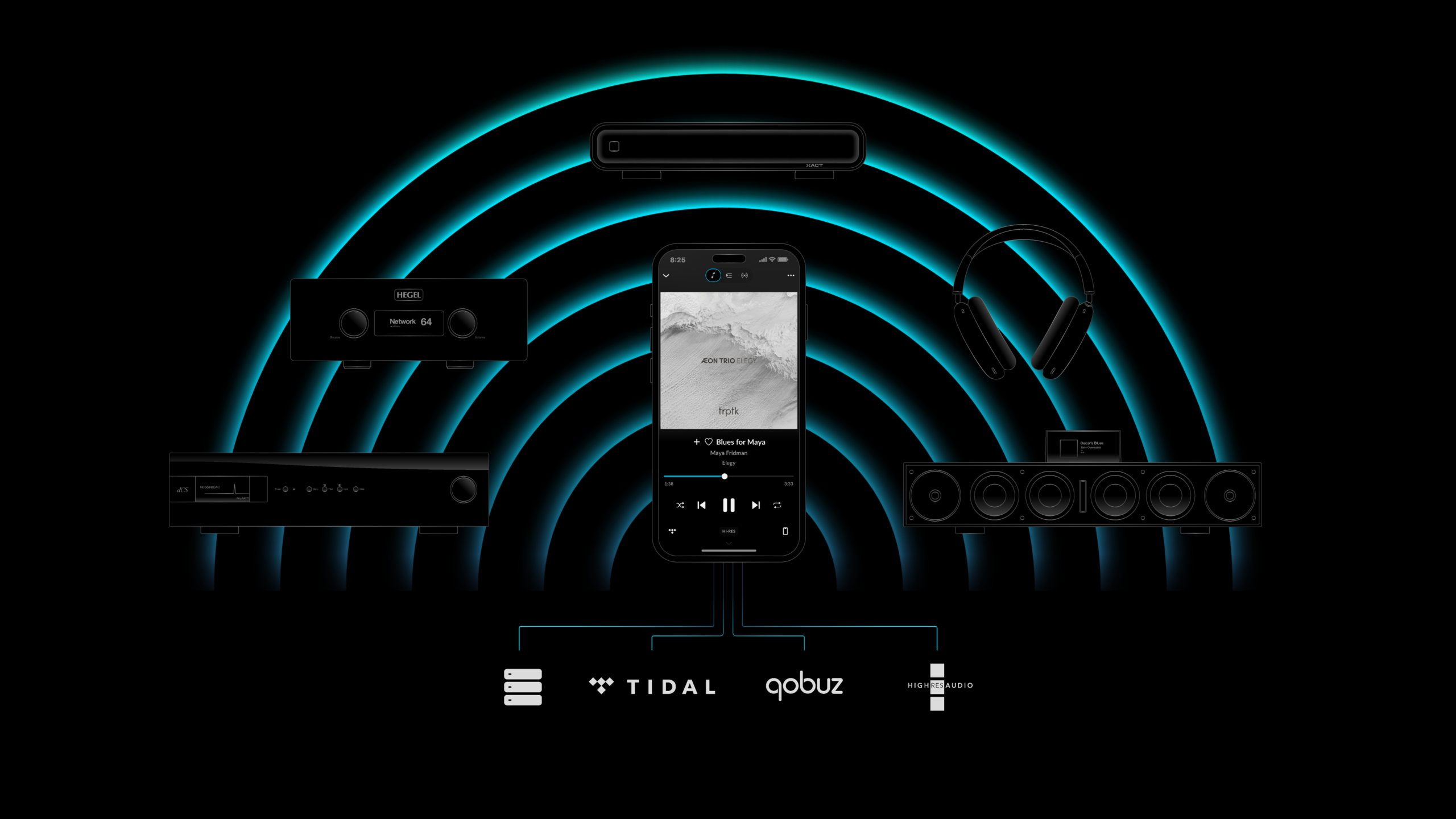
No core. No extra box. No compromise.
Most hi-fi apps need a "core" — a dedicated server running on a computer or NAS that manages your library and pushes audio to your streamer. JPLAY doesn't.
JPLAY connects directly to your hardware using UPnP AV, an open standard built into virtually every network audio product made in the last 15 years. Chances are your network DAC or streamer already supports it, even if the manufacturer never mentioned it on the box.
Install JPLAY, open the app, and it finds your hardware. That's it.
All your music. One beautiful interface.
JPLAY combines four sources in a single, unified library:
- TIDAL — hi-res streaming, including MQA when your DAC supports it
- Qobuz — studio-quality streaming up to 192 kHz / 24-bit
- HIGHRESAUDIO — curated hi-res catalog with VirtualVault access
- Local library — any UPnP/DLNA music server or HQPlayer library on your network
Browse each service separately, or mix tracks from any source into the same playlist. Search is instant. The interface is the same whether you're listening to a Qobuz release or a CD rip from your NAS.
At home. In the car. On the go.
JPLAY isn't only for the listening room. When you're away from your hi-fi, the same app plays directly on your iPhone, iPad or Mac — through headphones, in your car, or on any system you use day to day.
- Apple CarPlay — JPLAY appears natively on your car's display. Browse your library, tap a playlist, and drive.
- Headphones — play TIDAL, Qobuz, HIGHRESAUDIO, or your local files straight through any wired or Bluetooth headphones.
- Offline playback — use the Download feature to pull full albums from your local UPnP server onto your iOS device. Once downloaded, they play with no network connection required — on a flight, on the train, anywhere.
One app, one library, one interface — whether you're in your listening chair or on a mountain road.
JPLAY never touches your audio
This is the part that matters most for sound.
When you tap Play, JPLAY simply tells your streamer what to play and where to fetch it from — then steps out of the way. The audio stream flows directly from the source (Qobuz, TIDAL, HIGHRESAUDIO, or your local server) to your streamer or DAC.
No transcoding. No resampling. No buffer on your phone. Nothing between the recording and your hardware except the bits you paid for.
A quieter network. A cleaner signal.
JPLAY is carefully engineered to keep network traffic between the app and your streamer at an absolute minimum.
Less traffic on the network means lower EMI and fewer switching transients reaching the sensitive circuitry inside your DAC. The effect is real and audible: a deeper black background, more natural timbre, and better resolution of low-level detail.
It's a small thing that most apps don't think about. It's one of the reasons people notice JPLAY the moment they hear it.
Native HQPlayer support
For listeners using HQPlayer, JPLAY offers native control over the HQPlayer Control API. Run HQPlayer Desktop or HQPlayer Embedded on your network with Allow Control From Network enabled, and JPLAY detects it automatically.
Stream music, change filters, and manage playback from the same interface. No plug-ins. No workarounds. No compromise.
Built natively for iOS
JPLAY is written in Swift and optimized specifically for Apple silicon. It shows in everyday use: sub-second browsing of libraries with 100,000+ tracks, instant search, smooth CarPlay integration, and battery usage that stays respectful.
No cross-platform wrapper. No web view. Just a fast, responsive iOS app that feels like the hardware it runs on.
Made by audiophiles
JPLAY is developed by the team behind JCAT and XACT — with more than 15 years of experience in streaming oriented high-end audio hardware and software engineering. Every decision in the app is made by people who listen first and code second.
The goal has never been to be the biggest music app. It's been to be the best-sounding one.
Ready to hear the difference?